Student Affairs

Reflections from WRCSAD13 – Social Media and Student Affairs

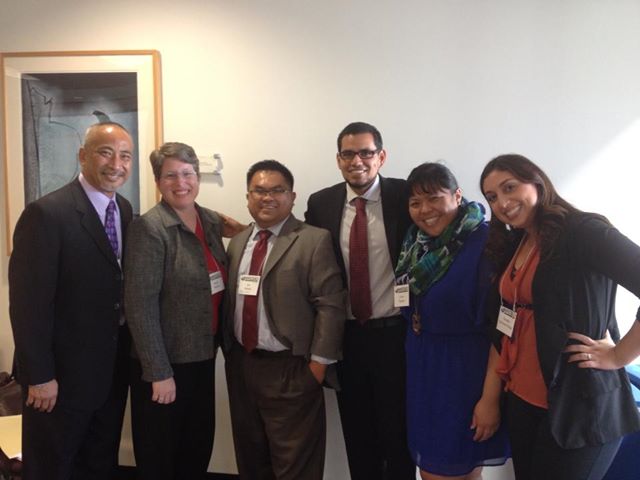
wrcsadI attended the Western Regional Career in Student Affairs Day (WRCSAD) at Long Beach State University last Saturday as a member of the UCSB NASPA Undergraduate Fellowship Program (NUFP) group. This was my first student affairs conference aside from a student affairs technology conference (satech) in Rhode Island two years ago.  I met a few folks I have known via Twitter in person (face-to-face) for the first time. I was also pleasantly surprised to meet a few student affairs pros who told me they’ve been following me on Twitter. The sessions I attended, including “Reflections from Senior Student Affairs Professionals,” “Professionals of Color,” and “Research in Student Affairs,” really invigorated me and validated the work that I do with students and through technology. The opening and closing keynote speakers were dynamic and provided personal perspectives on why they chose student affairs as a career. Another session I attended was “Social Media in Student Affairs.” The panel provided insights on their personal/professional use of social media. The students and professionals in attendance also asked questions about issues/concerns they have about social media, and one even shared their hesitation about using it. As I listened to the discussion, I thought about the different ways I use social media and how student affairs use it. I was also thinking about the message from the opening keynote speaker, Dr. Dyrell Foster, Dean of Student Affairs from Rio Hondo College. Here are some of the topics he shared and how I think social media relate:

Congruence of personal and professional values:

Dr. Foster spoke about how his personal life experience and the values he learned from his family are consistent with his professional value system. I think the topic of “authenticity” comes up from time to time when it comes to how one represents themself on and off social media. Do we share/relate with others online as we do “face-to-face”? In addition, how much can we separate our personal and professional lives on social media? Similarly, when it comes to our work, how much can we separate our values/perspectives from our work?

What is your reputation/legacy?

Dr. Foster asked the questions of what will be your reputation and the legacy we will leave behind. I think reputation is subjective; it’s how others define you from their perspectives. As personal as it is, I believe through our consistent actions and what we share, we develop a reputation(s), and we do have the ability to shape how others view us based on how we act online or what we share through our Facebook statuses, Instagram photos, Vine and YouTube videos, tweets, Linkedin profiles, and our blogs. With regards to legacy, what we write has the potential to be read and shared by more folks than we probably intended and, in some cases, even become the foundation for new projects at individual and institutional levels.

Who are your mentors/who will you mentor?

Dr. Foster also reminded the audience that student affairs are a tiny field and that the student/pro we are sitting with may be the one who will hire you or will connect you to the person who will be able to help you. Thank your mentors, he also said. I’ve met a few folks via social media who I’ve come to respect and follow. These are folks in student affairs, higher education, and technology fields. Since joining Twitter on August 9, 2010, I’ve had the opportunity to share some of my personal experiences and advice with graduate students and other student affairs professionals. I consider mentoring a relationship, so my experience with others on social media may not be defined as “mentorship.” However, the potential for conversations that started via social media could lead to meaningful mentoring relationships.

 As student affairs professionals, our identities and value systems are very much related to our work. I think the enjoyment and satisfaction we receive from our jobs relate to how aligned our value systems are with our work. The folks around us and the communities we work with also matter. Our communities have become more extensive in this digital age than on our physical campus. Social media also changes our identities and the impact of what we do.

Student Affairs Technology Competency Assessment

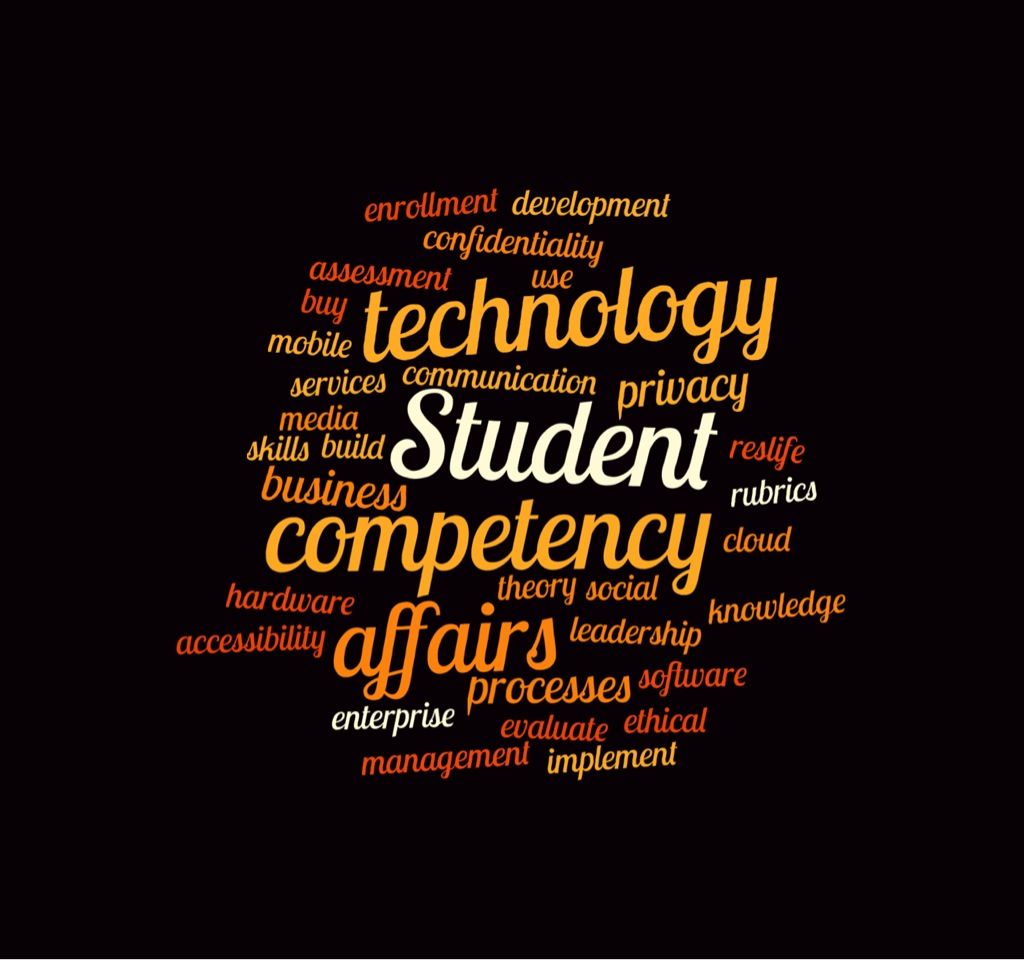
Student Affairs Technology CompetencyThis post is about student affairs technology competency.  Actually, this post is an invitation for readers to contribute some ideas on how to define and assess student affairs technology competency. I believe it’s a very important issue to resolve for our profession. It  will require a group effort to generate some ideas to move the discussion moving forward. Admittedly, the proposed ideas and approach are rudimentary so feedback is welcomed.

(continue reading…)


A Glimpse of Student Affairs in the (Near) Future?

future_of_student_affairsThere will come the point shortly when these five forces — mobile, social media, data, sensors (internet of things), and location, as Robert Scoble and Shel Israel call them in their book “Age of Context” will transform student affairs. As with every technology, the applications of these technologies have negative and positive consequences. Privacy is undoubtedly at the forefront of concerns. For example, this article concerns proposed legislation on cell phone tracking in retail stores. Consider these probable scenarios: (continue reading…)


Preparing for a Career Yet to Be Invented

Even the most skilled and brightest futurists in the 1990s could not have predicted the upcoming massive changes in the first decade of 2000 in higher education by consumer technologies such as the web, social media, cloud, and mobile computing. I still remember a job interview in the late 1990s for a university web director position. I was asked to present my vision of the university in the next decade and the role of the web and other technologies. Nowhere in my mindset were the consumer technologies that changed how we in the universities and students now do our day-to-day activities and business processes. I am intrigued and curious about what the higher education of 2020 would be like. I read predictions such as this “Higher education in 2020: three key forecasts from new report” and this (“College 2020”)  as well as Gartner IT Predictions for 2014 and Beyond to get a sense of what to expect. However, the accuracy of these long-term predictions remains to be seen. However, even as I remain cautious about the validity of these predictions, I know that I better keep up with the trends, even if these trends are not part of what could be considered part of my job.

Yesterday, I spent a few hours with some student affairs directors brainstorming about communications in our division. I’ve been told in the past that our role as IT is to provide the tools, and the departments are the ones who communicate with students. Frankly, I’ve never believed in the idea that IT is just a tool/utility provider. I think the value of IT comes not only from the infrastructure we manage but also from the innovation and transformation of business processes that became possible because of our partnership with our business units to develop new systems and methods to do our business. With this mindset, I approach communication and the role of IT. It is also with this mindset that I view my role as an IT manager/leader. To be an effective IT leader, I need to keep up with the preferences and demands of our students, our staff and other customers, including how they would like to communicate. I need to keep up with technologies and the mindset that come along with them.

I was recently asked if IT should be involved in communications and marketing, to which I responded, “I don’t see any reason why IT should not be.” Traditional thinking of IT probably does not include communications and marketing as part of their responsibilities. Still, the way I see it, given that technology is such a big part of communication these days (as it has been in recent years) and in the future, IT folks better start re-considering this traditional view.

The increasing convergence between IT and marketing/communication led me to think about what my career in the future would be. A few years ago, the idea of a social media/communication/marketing position and a videographer reporting to me in IT would probably not have been an idea well accepted. After all, that’s not what IT does. It’s perhaps not a conventional arrangement to have these positions in IT in many organizations, even to this day. Thinking a few years ahead from now, I wonder how the role of IT will evolve.  Will IT, as an organization, be combined with other departments, like marketing and communication, and be seen as part of a digital service organization? With this evolution, how will my role and responsibilities change?  Ten years from now, will I have a career I would never have envisioned as it does not exist today?

As I think about the possibilities and the uncertainties of the future, what I do know and what I’ve committed myself to is to continually learn and understand emerging technologies, the changing nature of higher education, the changing demographics of our students, as well as their preferences and demands. Learning is a process, and it takes time. Learning is a journey that’s not always a straight line. Along the way, I’ve been introduced to ideas and people I did not expect to meet. So, while I do not know what my career holds in the future, I will continue to prepare and learn towards whatever the destination will be.


Competency-Based Student Affairs Master’s Degree

What if there’s another way to earn a Student Affairs Master’s Degree not based on class time or credit but rather through demonstrated knowledge and skills? How about a combination of both? The problem with not having a Master’s Degree  in student affairs is that any chances of being considered for a functional area position, even entry-level, are very limited. There are student professionals who have gained practical skills, theoretical knowledge and competency through years of experience in the field but do not have this credential. This is an issue for professionals  who may want to move up or transfer into a different area within student affairs.

By no means am I devaluing the education and experience gained through graduate programs. As a matter of fact, I still would love to attend. However, the cost and my full-time job limit my options. This is a constraint shared by those in my position. Personally, it’s not that I had never considered attending graduate school. That was actually my plan but circumstances led me to becoming a professional in student affairs right after getting my undergraduate degree.

Alternative professional development and informal learning methods outside graduate programs have enabled those like me to learn and study the historical and theoretical aspects of my profession.  I have documented on this blog my approach to learning about student affairs theory and history via social media and my personal learning networks in addition to reading textbooks similar to those used in graduate programs. However, combined with professional experience, there is no current way to formally vet what I have learned. The question that comes to mind is how does one demonstrate competency, knowledge, and skills gained through professional experience against a established set of expectations like the ACPA and NASPA Professional Competency Areas for Student Affairs Practitioners? Who would be authorized to assess and issue the credential? A bigger question is when would competency-based degrees be more generally recognized and accepted in light of MOOC and other ways one can learn nowadays.


  • Archives

  • Copyright © 1996-2010 Joe Sabado - Higher Education & Technology Leadership. All rights reserved.
    iDream theme by Templates Next | Powered by WordPress