I read somewhere that one manages constraints and leads toward possibilities. Indeed, as a manager, getting things done and delivering services and products with the constraints of finite resources, including staff, within the time frame and the level of quality expected is a core of our duties. This responsibility gets even more difficult during stressful times brought on by budget cuts and increased mandates, but with no additional staffing to support the increased demands. However, It is too easy as a manager to get caught up in trying to get the most out of our staff in ways that may need to be more productive and produce unintended consequences. For example, to become more efficient during busy times, managers begin to micro-manage details, ensuring that staff are focused and are following procedures to minimize waste.
In some cases, new procedures are implemented to promote efficiency without realizing the additional time, energy, and effort to implement new procedures. Activities that are not considered part of completing projects and tasks are discouraged. For example, one-on-one meetings with the staff are eliminated as they waste time and take time away from projects. However, there may be more productive strategies than treating staff as machines and robots as units of resources. After all, our staff is human beings, driven by intrinsic motivations, with emotions, and more productive when engaged. This is where leadership is needed. Leadership has many definitions, but ultimately, leadership is about people. As I read once, you manage resources; you lead people.
As leaders, one of our roles in the workplace is cultivating an environment that promotes engagement, which should lead to increased productivity and improved quality of work. As I learned in one of my leadership workshops, engagement is the maximum level of personal satisfaction and productivity in the workplace. One without the other is not engagement. For example, one can be personally satisfied doing work that does not contribute to the organization’s goals. On the other hand, one can contribute to the organization’s goals yet they don’t feel personally satisfied.
As leaders, we must maintain touch with the idea that we must be available and build relationships with our staff. Managers must take the time to recognize their staff, acknowledge their contributions, and resolve staff issues. Having one-on-one meetings when staff can be heard and listened to is a very important activity on a manager’s schedule. Having lunch, taking a walk, or doing an activity with staff without talking about tasks are good examples of being available and building relationships.
How we also delegate matters. Giving orders in a command and control style does not work. Not when working in an environment that requires independent thinking and creativity. This style of managing only leads to resentment and staff not wanting to do more than what is expected from them. I’ve found that teams will go beyond what is asked of them if they know their managers care about them. Even small actions to show managers do care about their staff matter. Stopping by to say, “How are you?” means a lot to some. Taking the time to explain what is being asked of them in person instead of in an email that can be misinterpreted also helps.
As managers, don’t lose sight of the idea that our staff are human beings and not just units of resources. To be productive, managers must make themselves available and build relationships with staff to build an engaged workforce. Being short-sighted and giving orders to complete tasks can lead to unintended and counterproductive consequences.
Leading In Stressful Times
Keeping Your Seat at the (Virtual) Table
 As a leader of an organization and an advocate for students and staff alike, I have the responsibility to convey the concerns and issues facing my constituents to the campus at different levels of conversation. As part of the responsibility, I am always careful, though not always successful, in making sure I carry myself in a way that, even when I disagree with colleagues and those I deal with, my presence and what I share add value to the conversations. While I certainly play the role of agitator at times, I try to be respectful and carry myself in a way that others do want to engage me in conversations. Each interaction with another person is an opportunity to build relationships and trust, or it could just be when others decide they’d rather not deal with you because you’re perceived as a “smart jerk,” “know-it-all,” rude, or just simply too unreasonable. What good am I as an advocate for students, for my organization, and for myself if I am not at the proverbial table to be part of the dialogue? Understanding the proper moments when to push buttons, how to communicate, and battles to fight are part of one’s political acumen that contribute to one’s reputation and influence. This is the same perspective I carry with me on social media.
Social media can be a place for productive dialogues. Experts and novices alike can express their opinions in ways that can reach significant numbers of people and engage in dialogues with those who may share their perspectives and those who may have opposing opinions. Social media offers those who may not have avenues to express themselves in their non-digital worlds a place to be part of conversations. In the world of student affairs, #sachat and the weekly chat session with the same hashtag have become a place for lively discussions amongst student affairs professionals and students on personal and professional topics. In a sense, participants have a seat at the proverbial virtual table, a place they may not have at their campuses.
Just as it is on non-digital interactions, how one acts on social media may lead to others wanting to continue engaging with or choosing to disengage with you. This disengagement can be in the forms of unfollowing on Twitter, unfriending on Facebook, or blocking on Yik Yak. It may only take one message/interaction to lead to the actions above. I’ve had to do the above actions to a few individuals because I found them too difficult to deal with. It isn’t because I disagree with their perspectives but because of their arrogance and sometimes vulgar messages that led me to stop interacting with them. I’ve also noticed that individuals who may develop a negative reputation for being argumentative, a smart jerk, know-it-all, or just plain rude are ignored. I will not cite specific examples, but anecdotally, I’ve observed that even when a post/message comes from these individuals is ignored.
Having a seat at the (virtual) table is a position I value. As mentioned above, each interaction is an opportunity to build trust and relationships and to continue having a seat at the (virtual) table. However, losing that privilege just takes one message, post, or interaction.
image credit: http://www.pamwoldow.com/files/2013/06/seat-at-the-table-1.jpg
The Need for More Conversations on Character
My use and observation of posts and comments (yaks) on Yik Yak, an anonymous geo-location-based social media app, leads me to believe that perhaps we should have more discussions on the values of having good moral character. What constitutes a good moral character may be subject to debate. Still, I believe that there are certain attributes/actions we should consider as we engage on social media and in other forms of interactions. It seems to me that being kind, helpful, and not harmful even when we are engaged in highly charged conversations are basic principles we should consider and practice, regardless of whether others recognize us. Perhaps, we need to remind ourselves more of how to act and aspire to be individuals that make our world a better place.
In the world of student affairs, there are a lot of discussions regarding reputation and authenticity. They’re related to the concept of personal branding and crafting our persona and how we choose to present ourselves to our colleagues, students, and future employers. Can we be authentic, though if we are crafting our reputation and personal brand in anticipation/expectation of how others perceive us? In short, our efforts to craft our reputation are based on how we want others to perceive us. We craft ourselves as mavericks, radicals, out-of-the-box thinkers, innovators, non-conformists, passionate, dedicated professionals, and crusaders of certain causes, amongst other attributes. I’m not entirely sure which of these presentations are genuine or just facades.
On Yik Yak, the identities oMy use and observation of posts and comments (yaks) on Yik Yak, an anonymous geo-location-based social media app, leads me to believe that we should have more discussions on the values of having good moral character. What constitutes a good moral character may be subject to debate. Still, we should consider certain attributes/actions as we engage on social media and in other forms of interactions. Being kind, helpful, and not harmful even when we are engaged in highly charged conversations are basic principles we should consider and practice, regardless of whether others recognize us. We need to remind ourselves more of how to act and aspire to be individuals who make our world better.
In the world of student affairs, there are a lot of discussions regarding reputation and authenticity. They’re related to the concept of personal branding and crafting our persona and how we choose to present ourselves to our colleagues, students, and future employers. Can we be authentic if we frame our reputation and personal brand in anticipation/expectation of how others perceive us? In short, our efforts to craft our reputation are based on how we want others to perceive us. We craft ourselves as mavericks, radicals, out-of-the-box thinkers, innovators, non-conformists, passionate, dedicated professionals, and crusaders of certain causes, amongst other attributes. I’m unsure which of these presentations are genuine or just facades.
On Yik Yak, the identities of those posting comments are anonymous, so one cannot build a reputation. Interestingly, though, even on this anonymous platform, the comments range from outright despicable and malicious to the kindest, most encouraging posts. Why is that? What drives people to share these comments when their reputation is not a factor? I have had to block some individual(s) because of the vulgar and disgusting comments they post. I can still see their comments after I’ve blocked them (they appear as “This reply has been deleted.” to others). Consistently, they post the same types of malicious comments.
There are other users. However, that posts supportive and encouraging comments as a reply to a yak that expresses the need for support. For example, several times, I’ve seen yaks from individuals who are depressed or considering suicide. Immediately, other users reply, sharing their experience and support and encouraging them to seek professional help through our school’s counseling services.
I’ve also had civil and respectful debates about national and local events and issues I can’t have on Twitter or Facebook because those involved can be honest about their perspectives without fear of retribution or being shamed.
As we educate ourselves and others on effectively using social media, let’s go beyond the mechanics and how to build a digital reputation. Let’s remind ourselves what it takes to be good human beings.f those posting comments are anonymous, so one cannot build a reputation. What is interesting, though, is that even on this anonymous platform, the comments range from outright despicable and malicious to the kindest, most encouraging posts. Why is that? What drives a person to share the types of comments when their reputation is not a factor? I personally have had to block some individual(s) because of the vulgar and disgusting comments they post. I can still see their comments after I’ve blocked them (they appear as “This reply has been deleted.” to others), and consistently, they post the same types of malicious comments.
There are other users. However, that post supportive and encouraging comments as a reply to a yak that expresses the need for support. For example, several times, I’ve seen yaks from individuals who are depressed or considering suicide. Immediately, other users reply, sharing their experience and support and encouraging them to consider seeking professional help through our school’s counseling services.
I’ve also had civil and respectful debates about national and local events and issues that I can’t have on Twitter or Facebook because those involved in these debates can be honest about their perspectives without fear or retribution or being shamed.
As we educate ourselves and others on how to effectively use social media, let’s go beyond the mechanics and how to build a digital reputation. Let’s remind ourselves what it takes to be good human beings.
My IT Organization’s Guiding Values and Principles
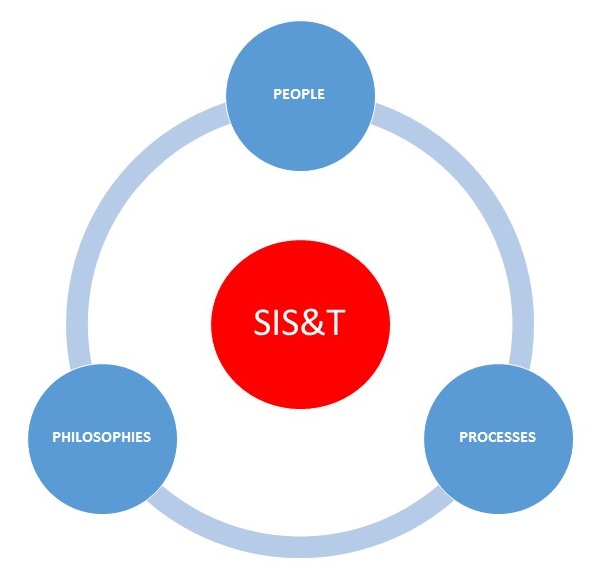 An IT organization that can effectively deliver quality service and keep up with its customers’ dynamic wants and needs requires guiding values and principles as foundations upon which it operates. Below are what I shared with my organization at our retreat soon after I became the Acting Executive Director for my IT organization in November 2014. The opportunity to be in this position was certainly unexpected. So the transition was short (one month), and within that time, I had to define and communicate my concepts and vision for our organization. I prefer that we as our organization go through a process of defining these guiding principles and values. Still, given the circumstance, some staff members wanted me to share my ideas as a starting point for the organization to consider and discuss. Upon discussions, the guiding values and principles were adopted for our organization.
As I’ve been with my organization for more than 15 years, I have a good sense of our culture, strengths, capabilities, and areas of improvement. I firmly believe that we are a very capable organization, proven by what we’ve been able to do and we can continue/improve our delivery of quality solutions and excellent customer service. We have a dedicated, highly knowledgeable, and skilled team with strong support from our senior management. For these reasons, I strive for the idea that when people think of THE model of higher education IT, they think of UCSB SIS&T!
I believe my organization’s guiding values and principles must be able to stand through time in the midst of ever-changing technology landscapes and dynamic customer services and needs. It is with this mindset that these guiding values and principles were formulated.
Mission:
SIS&T is committed to contributing to the success of UCSB students in their pursuit of learning and personal development by providing current, effective, reliable, and secure information technology delivered through exceptional and professional customer service.
Three Components: PEOPLE, PROCESSES, PHILOSOPHY
PEOPLE:
- We trust, respect, and value diversity and inclusion of ideas.
- We strive to develop a sense of community, and our organizational roles and hierarchy do not define worth/values.
- We are committed to helping others – our colleagues, partners (staff/faculty), and customers (students, parents, community).
PROCESSES:
- We will define processes and frameworks that add value and effectiveness to our work.
- We will be disciplined in implementing these processes and frameworks.
- We will make adjustments to these processes and frameworks as necessary.
PHILOSOPHIES:
-
- We are an adaptive and learning organization.
* Supportive and learning environment
* Concrete learning processes and practices
* Leadership that reinforces learning - We are customer-focused.
*People, Objective, Strategy, Technology (POST) - We must perform as a team.
* “Teams win championships” – VC Michael Young
- We are an adaptive and learning organization.
It has been about six months since our retreat, and I believe we have made some strides toward our goals of being an even better organization. Here are some of my observations:
– Changing the organizational culture, as I’ve found, takes time and requires leadership to model the behaviors we want to see in our organization. Communicating our guiding values and principles must be done through the leadership’s actions and words, and they must be practiced consistently.
– It requires participation/contribution from our entire organization to make change happen.
– At times, the environment that encourages diversity and inclusion of ideas has resulted in honest/frank conversations from different parts of our organization. I have welcomed and encouraged these sometimes uncomfortable conversations as I believe this is a sign of a healthy, evolving organization.
– I expected some missteps in my attempt to implement some changes, and I have. But, I acknowledged this at the retreat, and I encouraged the idea that, at times, we will “fail” with the ideas we try, but that’s perfectly okay.
Issues and Considerations with Evolving Student Affairs Technologies
Here are some technologies I think will become more integral parts of student affairs business in the next years – the internet of things, wearable computing, big data, analytics, social media, mobile, and cloud. Of course, some of these technologies are already in place. Still, the internet of things, big data, and wearable computing will become even more significant in how student affairs organizations do business and communicate with our students and customers. The future trend will evolve towards greater personalization in how information/services are delivered and what information is available based on context. Can you imagine the possibility I wrote about in this post? The changing student population (non-traditional, international, veterans, …), political pressures for accountability amid increasing tuition costs, and technological advancements are just a few variables that will shape the use of technology in student affairs.
While I can discuss the specific uses of the technologies I mentioned above, I’d like to focus more on the topics that we, as student affairs and IT professionals, must keep in mind as we consider using new technologies. This blog post will explore some of the challenges of using new technologies. It will also discuss some considerations regarding the effective use of technology in student affairs.
One of the challenges in predicting the future of anything is that does anyone know about the future? One can only look at potential scenarios based on history, current events, and factors (political, economic, social, technology, environment, legal – PESTEL) at different levels (local, national, global) and make some assumptions. In the world of student affairs and higher ed technology, another challenge is determining at what point to adopt new technologies as part of the way we do business. Of course, for the adoption of new technologies to happen at the institutional level, individuals who have the authority to allocate resources towards these efforts must be convinced that the benefits outweigh the risks and that these new technologies add value to the institution’s goals. In some cases, these individuals might not be motivated by institutional goals and risk/value analysis, but rather, the questions are more personal – “what’s in it for me?” and “does this add more work for me?”
Another topic central to the use of technology in student affairs is the concept of high touch/high tech in how we conduct our business, particularly in working with students. But technology cannot and should not replace all our interactions with our customers but rather complement them, as I discussed in this blog post.
I offered the challenges above because as we move to a likely scenario of what student affairs technology may look like, I think we can learn from past lessons. Consider the following responses I’ve received in my effort to introduce new technologies at my institution. These are sentiments from some of my IT colleagues and business users.
~1996 – “What do we need websites for? They’re fads. We have brochures.”
~2007 – “Social media? They’re fads. Security risks.”
~2009 – “Mobile? Students don’t use mobile. They’re fads. Security risks.”
~2012 – “Cloud? Our data center is more secure. They’re fads. Security risks.”
History shows that while platforms/tools within the technologies mentioned above may change (remember MySpace, Second Life), it seems these technologies will be around for a while and that they’ve become integral components in student affairs organizations. They’ve transformed how we do business. Here’s the reality: security risks are involved in making data available online, so as technology providers and end-users, this risk must always be considered. Furthermore, the use of technology introduces issues related to ethics and privacy. These must also be addressed.
As incorporating the internet of things and wearable computing into student affairs becomes a wider discussion, I suspect I will receive the same reactions as above – “They’re fads. Security risks. No one uses them. They’re toys.” The problem with that response is that rejecting the possibilities (maybe even inevitability) takes time to learn about these technologies and even longer to implement them. The design and approach to new systems must also change from an IT perspective. Consider the idea that user interfaces are no longer limited to screens but now include voice (aural) like Siri and Amazon Echo, gestures such as Leap Motion, wearable computing such as iWatch and Google Glass, and geo-location like iBeacons.
Even a more significant challenge is that there’s a mindset, practical skills, and knowledge within the organization that must evolve along with using these new technologies.
By the time our institutions come to the realization that they’re behind the realities of the needs and wants of their customers, we are now having to play catch up. We find ourselves in reactive vs. adaptive mode, which could lead to ineffective/costly implementations and, even worse, solutions that customers and end-users don’t find entirely usable. However, there’s also the danger of using new technologies for technology’s sake. Perhaps the most important aspect of how technology is used in student affairs should be why we are using it first. It is too easy to get caught up in the excitement of using new technologies because everyone is using them, or there’s the sense that we could get left behind. Finding the right time to adopt new technology in our organization is a difficult challenge. Perhaps, one way to approach the challenge above is to keep in mind the goals of student affairs, student learning, development, and success, when discussing technology implementation and use. As I wrote in this blog post, student affairs organizations and professionals must maintain the core mission and keep up with the trends.
This week, the proposed technology competencies were made available by NASPA/ACPA to the general public for feedback. That technology, previously a “thread” in the current list of competencies, is now a proposed competency is the right approach to addressing how technology fits into our student affairs roles as educators. The summary of the proposed technology competency, I think, effectively puts into context how technology can be used in student affairs. The proposed competencies are constructed at a level that can be used simultaneously and is not geared toward specific technologies.
“The educational technology competency area focuses on using digital tools, resources, and technologies for the advancement of student learning, development, and success as well as the improved performance of student affairs professionals. Included within this area are knowledge, skills, and dispositions that lead to the generation of digital literacy and digital citizenship within communities of students, student affairs professionals, and faculty members, and colleges and universities.”‘
The competencies and efforts ACPA’s Digital Task Force and NASPA’s Technology Knowledge Committee put forth ensure that technology use in student affairs is guided through the right frameworks.
For student affairs professionals to develop these competencies, organizations must commit to the culture of providing opportunities for staff (as well as students) to learn and practice them. This requires technology leadership at the senior student affairs officers’ table. These technology leaders must know/skills that include student affairs/higher ed history, theories, contemporary issues, and enterprise technology level implementations. Senior student affairs officers themselves must also accept the reality that they need to play the role of information technology managers.
Graduate programs must also play their part in educating future professionals about technology use in student affairs.
So, as we discuss the likely scenario of the future of student affairs technology, let’s keep in mind lessons learned from the past, keep our core missions as guiding principles, develop skills/knowledge as well as adopt an open-minded mentality that will allow us to adaptive and not reactive to be able to keep up with the dynamic needs of our ever-changing students we serve.
What’s your vision of the future of student affairs technology?