Leadership – Bruce Lee style

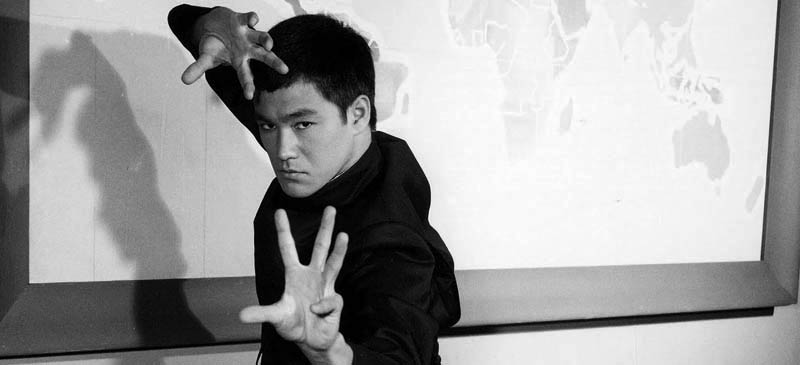
Bruce Lee - http://lifecoachesblog.com/2006/09/26/what-you-didnt-know-about-bruce-lees-kick-ass-success-2/

photo by lifecoachesblog.com

I have always approached my work and particularly my leadership role as relationship-based.  I strive hard to maintain positive relationships because that’s one of the most effective ways I get my work done and I like working in a positive environment.  Part of my success at the university where I work is the informal network I have developed across the years which have become a source of personal/career support as well as information. I also view each relationship with other people as being unique and therefore I adapt my communication style and the way I interact with them.

As I was going through some files on my computer earlier tonight, I came across a nomination form for a staff recognition award that was submitted by a co-worker on my behalf in 2007. It read:

“I can best describe Joe Sabado as the ‘Bruce Lee’ of managers.  People would ask Bruce Lee what his ‘system’ was, and he would say he didn’t have a ‘system’.  His style was the style of no style.  Likewise, Joe doesn’t have a management style, because no single method works with everyone, or at all times.”

 “Joe is a master at understanding people, and their current situation.  Joe always looks to adapt himself to the other person, and even to the other person’s mood.”

I work with IT and business colleagues with different communication styles and varying backgrounds. Adaptability in how I communicate is essential to my role.  There are those I work who prefers me to get straight to the point and those that don’t. What’s the point of speaking technical jargon those if who I am speaking with does not understand what I am talking about?

Self-awareness and my ability to recognize the emotions and moods of those I am interacting with are skills I continue to learn. Specially in my IT leadership role, I think soft skills are in my opinion just as critical as my technical knowledge. Ultimately, those we serve and work with are people and not machines.

How would you define your leadership style?



My Perspective on IT Leadership for 2012

I welcome 2012 with optimism and with gratitude! I am in a middle of a revolution that’s bigger than technology. I am not sure how to define it, but society is changing fast, in part brought on by technologies like social media and mobile.  The last time I experienced this change so rapid and exciting was in the mid 1990’s when web became mainstream.  I found 2011 to be a year of transformation for the  IT organization I work for and based on general observations, this seems to be true for IT organizations in general. As one in a leadership/management position of having to maintain legacy systems,  accommodate the changing needs of our customers and the consumerization of IT, it was a year wherein I had to spend an average of 3 hours at night learning/thinking about social media, mobile and how our roles as an IT organization are changing.  I spent some time thinking about how technology will transform our society in general and specifically about student affairs, the area of the university I work in. I learned many lessons along the way, not just about technology but how I will approach my leadership role moving forward.

(continue reading…)


Student Affairs as Social Business

“Even though we’re operating with the best of intentions in social media, we are still operating from silos. The customer however, does not see silos, they see the company as one.” – Brian Solis, The End of Business as Usual.

Social Business graphic

credit - socialware.com

I have only been active on popular social media sites like facebook and twitter the last year or so and much of what I have read about how organizations use social media in that time revolves around marketing, communicating and engaging with customers, those external to organizations. However, in the last few months, I have noticed more mentions of social business, which Michael Brito describes as “any company that has integrated and operationalized social media within every job function (and process) internally.” IBM describes social business as “one that embraces and cultivates a spirit of collaboration and community throughout its organization—both internally and externally.” Several companies have already embraced this concept per this report Research Summary: Introducing The 43 Use Cases For Social Business (Social Enterprise) by Constellation Org. Advocates of social business including Mr. Brito, Mr. Owyang, Mr. Solis and Mr Bradley/Mr MacDonald all emphasize the following points in some form: 1) social business goes beyond technology, it involves people, processes and culture 2) embracing the power of collective wisdom from internal employees and customers and 3) holistic approach – no single unit owns social efforts and customer service belongs to everyone in the organization.

(continue reading…)


Mobile Web – Consider the Purpose, then Design

Indian students using mobile - flickr

credit - helpingmedia

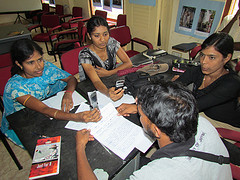
Trying to keep up and learn new mobile web design principles and frameworks is getting harder to do. Since last year, I have been doing quite a bit of research on mobile web for my work and for personal curiosity. Yet, I know I still have a long way to fully understanding what and how to properly go about approaching mobile web development.  There are many articles discussing design and development principles like adaptive, responsive web design, progressive enhancements, mobile first, and server side vs. client side adaptations.  Frameworks to develop upon are introduced from time to time as well.  A framework I am very familiar with is the UCLA Mobile Web Framework (MWF)  used by multiple University of California campuses including UC Los Angeles, UC Berkeley, UC San Francisco and UC San Diego. New ideas will undoubtedly come out in the next few months.  Questions I have had to think about and discussed with colleagues include “Should we have one site that can be displayed several ways depending on the device?”,  “Should we have separate desktop and mobile websites?” or “Are we also developing native apps?” I have quite a list of resources if you’re interested. I have tried to read, learn and experiment including creating a prototype site but it’s been a dizzying experience.

(continue reading…)


Why We Need to Redefine “Face to Face” Communication

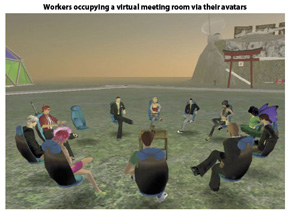
Virtual Meeting with avatars

credit - internetsiao.com

A story about a tech firm CEO banning the use of email for internal communication has been a topic of discussion around social media the last couple of days. Reported by multiple news agencies and websites, the title centers around the idea of “banning email” which is certainly a more sensational headline than the the fact that as the story notes,  “instant messaging and facebook-style interface” is replacing email for internal communications in the company.

This story reminds me of how in the last few years, some of the ways we, in our higher ed, communicate have changed. In addition to email and phones, instant messaging and video conferencing have become additional means to communicate in our daily work.  A few years ago, when we say face to face communication, that most likely meant two or more people looking at each other in the same physical room.

The concept of face to face communication is particularly relevant in student affairs and how we conduct our work.

I have heard some concerns about role of technology in how we interact with students and colleagues and how technology cannot/should not replace face to face interactions. However, our definition of face to face will probably have to change moving forward. Consider that some of our online students may never step onto our campus or that we will need to meet with students like international/out-of-state students before they even arrive on campus. With bigger bandwidth and the availability of wireless networking, face to face communication now carries a different meaning, to me anyways.

With Google+ Hangout, Skype via Facebook and other various free services available, the use of video conferencing for one-on-one and group communications will continue to become a bigger part of how we all communicate. Here are some examples I have seen video conferencing used on our campus:

  • My team of developers located on our campus use their webcams and Microsoft Communicator/Live Meeting to communicate daily with a couple of their colleagues who telecommute from different cities
  •  Our Admissions office staff use Adobe Connect to hold one-on-one and one-to-many virtual advising sessions with prospective students
  • A professor uses the same product to hold review sessions with his students
  • I had an informational interview using Skype and iphone with a graduate student from a different state
  • Students use TokBox to have multiple conversations
  • Video interviews of job applicants
  • A presentation on Identity Development Theories by a professor from San Diego State University to undergraduate students
  • Vendor presentations

A decade ago when the web became an important part of how we communicate with students,  along came  expectations of information/services available 24×7 and universities had to accommodate them. In these days of social media and more advanced technology, which include 2 way video communications, students will probably start expecting universities to use the tools and communicate they way they do in their personal lives.   In the future, what students define as face to face communication may be different than what we used to define it pre-social media days.

How do you see the way we communicate in our workplace  changing now and in the future?


  • Archives

  • Copyright © 1996-2010 Joe Sabado - Higher Education & Technology Leadership. All rights reserved.
    iDream theme by Templates Next | Powered by WordPress