Student Affairs

My Adventures in Social Media

credit: http://www.trektraka.com/

I presented on the topic of social media along with some colleagues at UCSB twice last week, one for the Professional Development Conference for the Division of Student Affairs on Thursday, March 22 and for a whole-day workshop called “Diving Into Social Media at UCSB” on March 23.  My presentations focused on overview of social media use in higher education. The Vice Chancellor for Student Affairs Dr. Michael Young opened both presentations in which he talked about the role social media in how we communicate and serve our students. In his words, “we need to evolve and transform so that we can thoughtfully and adequately serve our students.” He acknowledged that in moving forward with social media as part of our university business, we will make mistakes but that he would rather us move forward and make mistakes than stagnate. Personally, the Vice Chancellor’s declaration of social media as a part of our future was an affirmation of what I had observed a couple of years ago, that social media will be an integral part of how we in student affairs conduct our business.

Truth be told, there was a time when I felt like I could not even utter the words “social media” as those words were met with smirks and rolling eyes by the few skeptics who viewed social media as nothing more than a waste of time, a fad not worth investing, and risks not worthy of any benefits. These reactions reminded me of when I started developing websites in 1996 when I was asked “Why do we need websites for?” I realized when I started promoting social media to be formally adopted in our division that it would need the support of the Vice Chancellor.  I used to joke around with a few colleagues that the skeptics who view social media as “stupid” can always talk to the Vice Chancellor about his “stupid” idea.

I joined twitter in August 2010 in part to satisfy my curiosity about this “waste of time” and I have been wasting my time since then. That is if wasting time means creating professional networks, expanding my views of what the future may look like for higher education, including student affairs, and coming to realization that my technology leadership role will have to evolve to keep up with the changing demands of our students.

I’m excited about the future of social media and how we could use it in student affairs.  We’re just starting to figure out how to use social media beyond marketing. I’m looking forward to the point when we will start using social media as part of  social business. I don’t exactly know how we will evolve to get to that point, or how it will look like a year from now.

I asked VC Young once how he sees social media a year from now and his response was “We’ve got to find ways, across the division, to get to our students and constituents in ways that are effective. I don’t always know what that will look like, but this is my view:  if I wait until I fully understand what it looks like, we’ll never get a damn thing done.” I concur.



Student Leaders As Social Media Ambassadors

credit - prdaily.com

Student leaders should play a greater role in any higher educational institution’s social media efforts towards engagement and dialogue with their student communities. This group includes (but not limited to) orientation leaders, peer advisors, student organization officers, campus tour guides and resident assistants.  These student leaders can connect with their contemporaries in a way that in some ways are more effective than even the most social media savvy staff, faculty and administrators can. It is not so much that students  necessarily know how to use social media more appropriately or with more fluency than those of us in our professional roles, but more so because they understand student culture and they are considered part of the student community. Their participation and opinions will probably be better accepted and more favorably by other students since they are members of the student community. These student leaders should already have the knowledge on campus resources, policies and acceptable community conducts gained through their trainings as part of their positions.

(continue reading…)


Failure To Change

credit - piedmontwebdev

I suppose it’s so easy to get comfortable when we reach a certain level of success at personal and/or organizational level.  It is important to celebrate our accomplishments and all the things that got us to where we are, but there’s a danger in stagnating, being conservative.  But the world does not wait for anyone.  Specifically in student affairs, our world is changing quickly. Driven by our changing student demographics,  economic difficulties and technologies, the way our organizations operate must change, at least try to keep up, or we fail to serve our students.

I spend a lot of time following trends in how higher education and our students use technology, including social media and mobile computing.   This comes from the realization that if my organization (a student affairs IT shop) fails to realize the demands and wishes of our constituents, I would not be doing my job as a leader in my organization. Does that mean that we can and will always meet our constituents’ demands and wishes? Of course not. There are always more work to be done relative to our resources. It’s hard enough to provide day-to-day support and “keeping the lights on”,  tasks that while our users may not always see are critical. As difficult as it is to change our ways, to go beyond what we can support, the reality is that if we fail to look at what the customers demand of us, our organization is in danger of being replaced with other options. We no longer live in the world when our customers must go through IT for every single technology requests. Cheap or even free cloud based services are now viable solutions. Our customers use their mobile devices  to access the web and social networks.  As an IT organization, do we take the role of the department that is seen as obstructionist to a point where customers no longer want to work with us or one that is a willing partner to progress?

I feel considerably lucky that we have a person at the top of our organization, Vice Chancellor Dr. Young, who is a champion of change and a true student advocate. He is a visionary who will freely admit that while he may not always know how to get to where we need to get to, he does know when it’s time to change, to take a new direction.  An organization’s ability to be open and accepting to change is rooted in its culture and leaders like Dr. Young plays a huge influence on how the culture is shaped. As those working in our organizations, I also think we have personal responsibilities to be open to change. Failure to change has its consequences.


Listing Technology on Your Resume – An IT Manager’s Perspective


credit - monster.com

I initially hesitated to  comment on Ed Cabellon’s blog post “Listing Technology on Your Student Affairs Resume” because I wasn’t quite sure how resumes for IT positions differ from student affairs positions.    I do think there are general considerations applicable to both and so this post is to offer an additional perspective. Purely from my perspective as a hiring manager in a student affairs IT department and limiting the conversation to the technology portion of a resume, here are what I look for:

* Context of how an applicant used the technology. This means numbers and scope. Designing an application used by 2 people is different from designing a system used by 1000 people.  A list of technologies are good, putting some context behind the experience is even better. It helps to see specific versions of software and/or programming language(s) used.

* Experience with technologies relevant to the position. Listing technologies used 20 years ago is irrelevant. For example, if we are looking for a SQL Server database developer and I see FoxPro as the only database experience listed, that’s probably not a good fit. In addition, I think it’s probably acceptable to list other technologies like web development software, social media, desktop publishing as secondary information and they do not take focus away from required technologies to the position.

When interviewing an applicant, here is what I expect:

* I expect an applicant to be able to describe what the task/problem the technology solved, how technology was used. I also would expect them to describe their role(s) and their use of the technologies including from the context of business perspective.

* Instead of asking questions like “describe how you would use this tech?” I ask “how have you used this tech?” What I’ve found is that even applicants who list certifications like MCP, MCSD, etc, when asked practical questions, sometimes cannot answer questions that I would assume are fundamental knowledge. In other words, I obviously want to know that an applicant has some foundational understanding of how/when/why to apply technology but I also want to know that they’ve had some experience working with them.

* Do not misrepresent your level of experience. After having reviewed hundreds of resumes and interviewing applicants, I have found it easier to determine whether an applicant’s resume matches his/her actual experience during their interview.

The required level of experience and skill set vary based on the classification of the position we are trying to fill. My general advice is to represent your experience to match the job description and requirements for the position. In my career, I have been a developer, project manager, department manager and now a director. When the position I am applying for is a software developer, I would highlight my software development experience. As a matter of fact, if an applicant is applying for a software developer position and all I see is management experience, I would question whether the applicant is actually a good fit or if they’re even competent for the position.

When determining an applicant’s level of competence, motivation and fit with an organization, there are other evaluation processes that could/should be used including reference checks, questions about soft skills and coding exercises.

What’s your perspective on my thoughts above? Any other considerations to add?


Student Affairs Graduate Programs and Technology

Eric Stoller wrote a blog post about the topic of  student affairs graduate programs and technology on InsideHighered.com. Specifically, he wanted to know which graduate programs are leading the way when it comes to including technology in their curricula.  Below is the comment I shared coming from someone who does not have a Master’s degree in Student Affairs but does have several years of experience working from both the functional and IT sides of student affairs.

=============================================================================

Thanks for asking this question Eric. The topic of technology in student affairs is indeed very big and as you pointed out, bigger than social media. To get an idea of what technologies are used in student affairs, here is the information systems portfolio (http://sist.sa.ucsb.edu/Portfolio.aspx) of the central student affairs IT at UCSB where I work. I apologize that this is still in pdf (for now).

There are aspects to technology  that should be studied including policies, practices, staffing and the technologies themselves. Dr.Will Barratt from Indian State University wrote about the topic of Managing IT in Student Affairs in May, 2001. Here’s the article: http://studentaffairs.com/ejournal/Spring_2001/will2.html.

Leslie Dare, the Director of Student Affairs Technology Services at NC State University discussed the topic of Technology, Student Affairs and Graduate Programs on Highered Live with Eric himself  – http://higheredlive.com/technology-student-affairs-and-graduate-programs/. She actually taught a course on Technology in Student Affairs as well. Here’s the description – http://www4.ncsu.edu/~ladare/eac595/.

I don’t have a Master’s degree in student affairs, so I can only offer my perspective from my several years of experience in both functional and IT units in student affairs. Please take my perspective with a grain of salt.

What I think should be considered as an approach in student affairs graduate programs with regards to technology is to examine technology in the context of theoretical frameworks and practices and apply them in what I consider realities of today (changing demographics, advancement in technology, budgetary constraints). I think this perspective is similar to Kevin Guidry’s point.

I work full-time in IT and I even I don’t have enough time to learn all the different areas such as database management, server/network support, security, procurement, accessibility and software development. These areas don’t even include having to learn emerging technologies, which in my case, I spend time learning at night. I wouldn’t expect practitioners to spend their time learning all these technologies in addition to the demands of their business duties. The question of how much should practitioners know to be considered competent is another topic in itself.

From an IT perspective, what has been really helpful when working with functional units is when practitioners have been able to articulate their business processes/needs, the “why” questions/answers.  If they can provide us with some ideas on how to build it, even better, but not required. I think as technology becomes even more significant in student affairs, more so than today, practitioners who have the knowledge in business process analysis, on top of practical experience/understanding of theoretical frameworks will be the ones in demand. Regardless if the technical solution sought is to be developed by IT, bought from a vendor, or utilize free services on the web, there is still the need to understand how these solutions would address business needs. Let’s take social media. I think it’s just a matter of time when student affairs will start to adopt social media for other uses beyond marketing and engaging with customers. I can see student affairs using social media for operational and student service uses.

Personally, I’ve always relied on the knowledge of our functional units to guide my team and I in how to approach a technology solution. There’s the ideal technical solution that IT may want to build and provide but then there’s the solution(s) that meets the realities and demands of day-to-day activities.

Kevin Guidry shared his research on the history of technology and student affairs with me months ago and it is interesting that given the significant role of technology in student affairs throughout its history that we’re still asking this question.

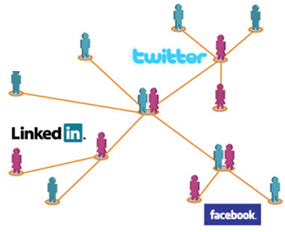
As an aside, I had also asked some feedback on twitter, facebook, google+ andlinkedin asking how student affairs practitioners use technology in their line of work. Unfortunately, I only received 10 responses. I’m left wondering too if it was wrong timing, the topic is not interesting or I just posed the questions wrong. In any case, If you happen to be reading this, I would love to have some of your time to answer a few questions here: https://joesabado.com/articles/technology/student-affairs-technology-questionnaire/.

thanks:)
Joe


  • Archives

  • Copyright © 1996-2010 Joe Sabado - Higher Education & Technology Leadership. All rights reserved.
    iDream theme by Templates Next | Powered by WordPress