Social Media

High School Students, Digital Citizenship and Social Media for College Prep

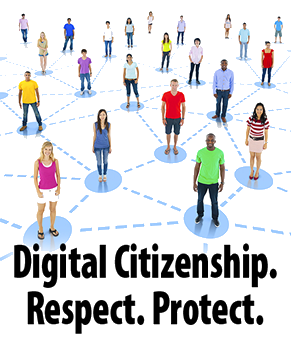
Social media is now used by some university admissions departments to screen applicants for admittance. In addition,  some employers are also using social media to perform background checks as part of their hiring process. For these reasons, it is more important than ever for high school students to realize the impacts of their online activities and how to be good digital citizens.

Students who may not have parents/family members who are well-versed when it comes to using technology and specifically social media will need some guidance to not only avoid potential pitfalls of social media but to take advantage of the benefits it offer as well.  Educating these students may have to fall on the responsibilities of the same pre-college academic preparation professionals who are now educating them about the college application process, financial aid and meeting college requirements.  High schools themselves will also need to be involved in the effort . For college prep professionals and high schools to be able to educate the students require: 1) that they themselves are knowledgeable about social media, including the benefits and risks involved, 2) this new responsibility should formally included in the employees’ job descriptions and 3) the high schools are open to embracing this idea that social media provides benefits to their students and they will have to weigh this within the constraints of policies such as the Children’s Internet Protection Act, security concerns, bureaucracies, lack of resources, and most significantly, cultures that are hesitant to the use of social media.

Pre-college academic prep units who are interested in including social media education for high school students as part of the services they offer should look into existing resources such as the Digital Citizenship website, programs such as the Digital Citizenship and Creative Content program and existing high school curriculums for guidance. They should also look at how to make this effort sustainable, given the resources required. If you have experience or know of resources related to this effort, I would love to hear from you.


image credit


SM – Higher Ed

[Social Media Resources][Related blog posts]

[tabs title=”” active=1 event=”click”]
[tab title=”Uses:”]

[General] [Academics] [Admissions] [Alumni] [Career] [Grads] [Housing] [Int’l Students] [Marketing][Student Life]

General:

[hungryfeed url=”http://www.diigo.net/rss/user/Joesabado/blog_some_hied” feed_fields=”” template=”3″ link_target=”_blank” max_items=100]
Additional links at Diigo.

Academics: [Top]
[hungryfeed url=”http://www.diigo.net/rss/user/Joesabado/blog_some_hied_acad” feed_fields=”” template=”3″ link_target=”_blank” max_items=100]
Additional links at Diigo.

Admissions: [Top]
[hungryfeed url=”http://www.diigo.net/rss/user/Joesabado/blog_some_hied_adm” feed_fields=”” template=”3″ link_target=”_blank” max_items=100]
Additional links at Diigo.

Alumni:[Top]
[hungryfeed url=”http://www.diigo.net/rss/user/Joesabado/blog_some_hied_alum” feed_fields=”” template=”3″ link_target=”_blank” max_items=100]

Additional links at Diigo.


Career Center:[Top]

[hungryfeed url=”http://www.diigo.net/rss/user/Joesabado/blog_some_hied_career” feed_fields=”” template=”3″ link_target=”_blank” max_items=100]

Additional links at Diigo.

Graduate Students:[Top]

[hungryfeed url=”http://www.diigo.net/rss/user/Joesabado/blog_some_hied_grads” feed_fields=”” template=”3″ link_target=”_blank” max_items=100]

Additional links at Diigo.

Housing:[Top]

[hungryfeed url=”http://www.diigo.net/rss/user/Joesabado/blog_some_hied_housing” feed_fields=”” template=”3″ link_target=”_blank” max_items=100]

Additional links at Diigo.

International Students:[Top]

[hungryfeed url=”http://www.diigo.net/rss/user/Joesabado/blog_some_hied_intl” feed_fields=”” template=”3″ link_target=”_blank” max_items=100]

Additional links at Diigo.

Marketing:[Top]

[hungryfeed url=”http://www.diigo.net/rss/user/Joesabado/blog_some_hied_marketing” feed_fields=”” template=”3″ link_target=”_blank” max_items=100]
Additional links at Diigo.
Student Life:[Top]

[hungryfeed url=”http://www.diigo.net/rss/user/Joesabado/blog_some_hied_studentlife” feed_fields=”” template=”3″ link_target=”_blank” max_items=100]

Additional links at Diigo.
[/tab]
[tab title=”FERPA:”]
[hungryfeed url=”http://www.diigo.net/rss/user/Joesabado/blog_some_ferpa” feed_fields=”” template=”3″ link_target=”_blank” max_items=25]
Additional Resources at Diigo
[/tab]
[tab title=”HIPAA:”]
[hungryfeed url=”http://www.diigo.net/rss/user/Joesabado/blog_some_hipaa” feed_fields=”” template=”3″ link_target=”_blank” max_items=25]
Additional Resources at Diigo
[/tab]
[tab title=”Guidelines/Policies:”]

Policies/Guidelines:
[hungryfeed url=”http://www.diigo.net/rss/user/Joesabado/blog_some_policies_hied” feed_fields=”” template=”3″ link_target=”_blank” max_items=25]
Additional resources at Diigo

[/tab]
[tab title=”Accessibility:”]
[hungryfeed url=”http://www.diigo.net/rss/user/Joesabado/blog_some_accessibility” feed_fields=”” template=”3″ link_target=”_blank” max_items=25]
Additional Resources at Diigo

[/tab]
[/tabs]


Exploring Social Media For Curiosity’s Sake

What if we sometimes just explore social media just for the sake of curiosity, just for fun? Sometimes, I get tired having to examine social media in the context of my profession as an IT staff in higher education.  Sometimes, I get tired of having to think about policies and why we should/should not be using social media and having to deal with those that just see social media as a threat to our institutions. I think some of those resistances come because of the fear of the unknown and the fear of being left behind and so instead of accepting change, some folks resist to slow down change to match their comfort level.   Sometimes, I get tired of thinking about metrics and strategies and guidelines.

I enjoy spending hours on social media each day because it’s very fascinating to me. Many have written and spoken about the idea that social media is not just about technology and I agree. I like connecting with people and I like learning, a lot. I go on twitter and it’s like a candy store to my brain. I find tweets, blog posts, status updates, photos and videos that take me to learning something new for days, meeting new people and reconnecting with old friends. Some things I come across challenge me and some validate my thoughts.   I like to observe the interpersonal dynamics that go on between individuals based on their tweets, their conversations and even in what may consider “communities” based on hashtags or common interests. I like thinking about the possibilities brought on by social media, both good and bad.

I think sometimes we just need to stop over analyzing what social media means and trying to convince others to think the same way we do.  Social media means different things to all of us. Let’s just enjoy it from time to time.


image credit: http://www.pittimmagine.com/en/corporate/news/2011/tobiasroettger.html


I Don’t Use Facebook Much, I Don’t See How Students Do Also

How would you respond to someone, especially to one in a position of authority, says those words to you?

This is a paraphrase of a response  I received when I was talking to a campus colleague about potentially using facebook for communication with students.  I can respect the idea that maybe, just maybe, facebook is not the right medium to communicate “official campus messages” like prompting them to log in to the campus student information system website to check a very important message. What I have a hard time accepting is the thinking that just because one does not see the value of a tool or that they do not use it means everyone else share the same point of view. Of course itt works the other way as well that just because I use social media heavily that I expect every student to be using it as much as I do. But rather than imposing our own biases, how about rather from looking at social media from our customers’ perspectives. There are studies like Pew Internet Research that shows young adults (18-29), the majority of our students, are indeed using social media.

I only wonder how much of this thinking prevents organizations, specifically higher ed,  from keeping up with the wants and needs of those we serve. I get the argument that we don’t have the necessary resource to meet the demands, that we have policies that we must adhere to and prevents us from using certain technologies, but I think it’s this mentality of elitism, the desire to keep the status quo that is a bigger problem.

Change can be scary and I wish I know what the future holds in term of how social media fits into what we do. What I do know is social media is here to stay and for those who disagree with this notion, we’ll just have to agree to disagree.


image credit – http://www.autonettv.com.


My Adventures in Social Media

credit: http://www.trektraka.com/

I presented on the topic of social media along with some colleagues at UCSB twice last week, one for the Professional Development Conference for the Division of Student Affairs on Thursday, March 22 and for a whole-day workshop called “Diving Into Social Media at UCSB” on March 23.  My presentations focused on overview of social media use in higher education. The Vice Chancellor for Student Affairs Dr. Michael Young opened both presentations in which he talked about the role social media in how we communicate and serve our students. In his words, “we need to evolve and transform so that we can thoughtfully and adequately serve our students.” He acknowledged that in moving forward with social media as part of our university business, we will make mistakes but that he would rather us move forward and make mistakes than stagnate. Personally, the Vice Chancellor’s declaration of social media as a part of our future was an affirmation of what I had observed a couple of years ago, that social media will be an integral part of how we in student affairs conduct our business.

Truth be told, there was a time when I felt like I could not even utter the words “social media” as those words were met with smirks and rolling eyes by the few skeptics who viewed social media as nothing more than a waste of time, a fad not worth investing, and risks not worthy of any benefits. These reactions reminded me of when I started developing websites in 1996 when I was asked “Why do we need websites for?” I realized when I started promoting social media to be formally adopted in our division that it would need the support of the Vice Chancellor.  I used to joke around with a few colleagues that the skeptics who view social media as “stupid” can always talk to the Vice Chancellor about his “stupid” idea.

I joined twitter in August 2010 in part to satisfy my curiosity about this “waste of time” and I have been wasting my time since then. That is if wasting time means creating professional networks, expanding my views of what the future may look like for higher education, including student affairs, and coming to realization that my technology leadership role will have to evolve to keep up with the changing demands of our students.

I’m excited about the future of social media and how we could use it in student affairs.  We’re just starting to figure out how to use social media beyond marketing. I’m looking forward to the point when we will start using social media as part of  social business. I don’t exactly know how we will evolve to get to that point, or how it will look like a year from now.

I asked VC Young once how he sees social media a year from now and his response was “We’ve got to find ways, across the division, to get to our students and constituents in ways that are effective. I don’t always know what that will look like, but this is my view:  if I wait until I fully understand what it looks like, we’ll never get a damn thing done.” I concur.


  • Archives

  • Copyright © 1996-2010 Joe Sabado - Higher Education & Technology Leadership. All rights reserved.
    iDream theme by Templates Next | Powered by WordPress