Author Archive

Recognizing Some Cost of Innovation

Following higher education folks on social media who are definitely thinking about how to change the system in its current form makes me envious/frustrated sometimes that I don’t have the foresight they do.  Sometimes I feel like maybe as part of the status quo, I am contributing to the old way of thinking that prohibits innovative thinking. Maybe I am part of the problem.

But then again, sometimes, it frustrates me to see my colleagues and my institution have to shoulder the burdens of meeting unfunded mandates, having to say not to new projects we know can benefit our students and our staff, maintaining legacy systems that were built so many decades ago and at the same time trying to keep the lights on. It frustrates me to see my colleagues have to shoulder work enough for more than 2 or 3 people. These are the same colleagues who will never get the praise they deserve because they work behind the scenes, making sure our servers and network stays up, that they are secure. These are the same colleagues who will gladly work beyond 5 pm to finish their codes for the next release or to fix some bugs in applications they must try to understand because it was written by someone else before them.

In the last decade or so since I joined my organization, I would like to think I’ve contributed to new solutions to improve how we do business through the applications I’ve created. I may even dare say they were innovative ideas. Innovative in that these applications were new to our organization or they redefined the way we do business. But for every new ideas introduced, what I have come to realize is that there’s a cost to maintaining these ideas. For every application I created, someone other than me had to take on the responsibility of maintaining/enhancing them.

As much as I get excited about the possibility of implementing new ideas or new technologies in our organization, even as they are for the benefit our customers, the reality is that for my ideas to be realized and to be sustainable, I need the help of my colleagues. Unfortunately, these are the same colleagues who are too busy having to maintain some of those bright ideas I had years ago.

Career Success – Not Overnight, But Working A Lot of Nights

If there is one thing that annoys me, it is the assumption that I reached my position in my organization because of favors, “kissing ass”, or via tokenism.  It reminds me of when one of my hall mates during my freshman year in college inferred that I was somehow accepted to UCSB only because of affirmative action. If indeed I was given some advantage via those means I mentioned, so be it. However, having seen my father work multiple jobs simultaneously as far as I can remember, I came to believe that the world does not owe me anything. I came to believe one way I was going to be successful is through long hours of smart, hard work. I may not be the smartest person but I do pride myself in working those extra hours to get ahead, or in most cases, just to keep up with others who are smarter than I am. Maybe I’m just a “workaholic” with the sometimes 14 hour days or going to bed at 3 am just to wake up at 6:30 am to get  ready for work. This is a routine that’s become normal for me since I started working professionally in 1996. For me, it’s just fun, learning about new ideas, new ways to program, or just thinking about random topics like the next generation student information system, 21st century leadership or social business.

I see discussions about work-life balance, or leaving the workplace at 5:30 pm. While I respect all perspectives regarding this topic, ultimately, we all have our own motivations that drive our choices and the amount of hours we work.  Spending time with my wife is definitely a top priority for me and throughout the years, we’ve found arrangements that allowed us to spend time together by spending time during weekends and evenings. Working after she has gone to bed definitely helps.  It helps that we both work for the same organization and we have the same schedule. The 1 hour daily commute together gives us time to talk.

I was once asked if my habit of working long hours and  late nights is a “badge of honor”. I’ve never seen it that way.  It’s not about me proving anything to anyone nor is it about competing against anyone else.  What I can say however is that I do not think I would not be where I am now without those countless hours of working late nights. Certainly, I did not get to where I am now overnight, but it’s through working a lot of nights.


Future of Work, Policies, Technologies

Colleagues who telecommute from northern California and Oregon are in town for a two-day visit starting today. I only see them in person two or three times a year now, though through technology, I can interact with them every day.  Their visit reminds me of how the IT organization I work for has grown significantly since 1996 when there were about 6 of us to about 50+ today. The way we work has also been transformed significantly as well.   Their visit also reminds me of several things:

  • When two of my colleagues needed to move out of Santa Barbara maybe four or five years ago, human resources told me we had no policy regarding full-time telecommuting and I was further told there was not a single employee in the entire University of California system who had this work arrangement. My department had to create our own telecommuting agreement which was then approved by HR. This leads me to thinking that just because there is no policy or that something has never been done before does not mean that will always be the case. Organizations need to evolve to meet the changing business demands and using the absence of policy or lack of precedence to hinder progress does not make sense.
  • Dependence on technology in how student affairs conduct business is evident by the investment and commitment our senior management towards our IT department. There is not a single unit in our student affairs organization that does not rely on technology as evident by the number of systems we have implemented the last decade and a half.  The emergence of social media, cloud, and mobile computing has introduced new opportunities for the organization to further utilize technology in how we serve and communicate with students, parents, other customers as well as with our colleagues.  However, consumer technologies have also brought challenges to IT.
  • Telecommuting and working in distributed environment has become an accepted arrangement and this became possible because of technology, an indication of the future of work. We are no longer located in the same physical building and the way we communicate changed from just telephones and face-to-face visits to now using video conferencing tools, emails, and other forms of social media. I remember how I had to drive to campus at night to work because technology to access my workstation and servers did not exist when I started working in my department in late 1990’s.
  • Approach to leadership, management  and community-building needed to evolve to accommodate the distributed nature of work and teams. Communicating via instant messaging, email and even through videos have led to misinterpretations and physical/emotional reactions do not often get communicated as clearly compared to face-to-face conversations. While tasks and schedules can easily be communicated, building relationships and communities take more effort. When we hire new employees, they may not meet their colleagues whom they work with remotely for months and so even setting up a wiki profile page with personal information and outside interests can start the introduction and build connections based on common interests. Soft skills, including emotional intelligence, is more than ever required for leadership and management. Even for someone like me who is relationship-oriented, I sometimes fail to think about how my emails or what I communicate electronically may be received by my teams because I don’t see immediate reactions from my staff.

The importance of these visits go beyond work as these are the only few times a year when we can socialize in person. Those few hours when we go to a local restaurant and just catch up are what I certainly look forward to and I’m sure I’m not the only one who feels the same way.


Social Media in Higher Education – Challenges/Opportunities

Facebook at Universities

Social media presents challenges and opportunities for universities in the way they communicate and provide services to students, enhance their educational experiences, and prepare them for the workforce. Social media can be defined as a set of online tools that people use to share content, opinions, and ideas that create potential interactions. The most popular social media sites are facebook, twitter, LinkedIn, YouTube and blogs.  Combined with mobile devices and cloud computing, all known as consumer technologies, social media has enabled students to have access to information anytime, anywhere.

The majority of college students are members of the Millennial Generation, those between the ages of 18-29 years old. They are also known as the Net Generation because of their generally increased use and familiarity with communications media and technology. According to a study conducted in 2011 by Pew Internet Center, 61% of online Americans under the age of 30 use social network sites on a typical day. A 2010 survey conducted by Harrisburg University of Science and Technology in Pennsylvania found that of the 800 students and faculty that responded, roughly 20 % of the respondents spent between 11 and 20 hours a week using social media.

(continue reading…)


High School Students, Digital Citizenship and Social Media for College Prep

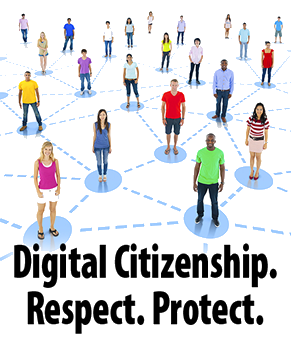
Social media is now used by some university admissions departments to screen applicants for admittance. In addition,  some employers are also using social media to perform background checks as part of their hiring process. For these reasons, it is more important than ever for high school students to realize the impacts of their online activities and how to be good digital citizens.

Students who may not have parents/family members who are well-versed when it comes to using technology and specifically social media will need some guidance to not only avoid potential pitfalls of social media but to take advantage of the benefits it offer as well.  Educating these students may have to fall on the responsibilities of the same pre-college academic preparation professionals who are now educating them about the college application process, financial aid and meeting college requirements.  High schools themselves will also need to be involved in the effort . For college prep professionals and high schools to be able to educate the students require: 1) that they themselves are knowledgeable about social media, including the benefits and risks involved, 2) this new responsibility should formally included in the employees’ job descriptions and 3) the high schools are open to embracing this idea that social media provides benefits to their students and they will have to weigh this within the constraints of policies such as the Children’s Internet Protection Act, security concerns, bureaucracies, lack of resources, and most significantly, cultures that are hesitant to the use of social media.

Pre-college academic prep units who are interested in including social media education for high school students as part of the services they offer should look into existing resources such as the Digital Citizenship website, programs such as the Digital Citizenship and Creative Content program and existing high school curriculums for guidance. They should also look at how to make this effort sustainable, given the resources required. If you have experience or know of resources related to this effort, I would love to hear from you.

image credit


  • Archives

  • Copyright © 1996-2010 Joe Sabado - Higher Education & Technology Leadership. All rights reserved.
    iDream theme by Templates Next | Powered by WordPress