Author Archive

Respecting Our Uniqueness & Multiple Dimensions of Identity

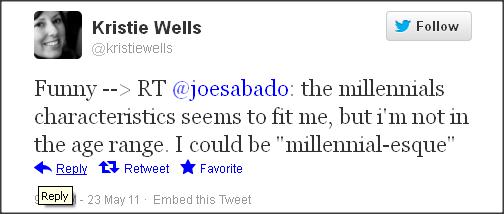
“Millennials are tech savvy” was a statement mentioned in a training session about working in a multi-generational workplace I attended.  “Prove it to me” attitude was attributed to Gen Xers (1965-1980).  I equate these statements to the model minority myths associated with Asian Americans. They are general statements applied to groups that may or may not be true. One limitation of assigning traits to groups using one variable (generation) in my opinion is that it is too simplistic.There are also implications to these statements in that by accepting these generalities and neglecting to see the  uniqueness of the individuals we deal with, we may just be making inappropriate assumptions. The other limitation of just using generations to assign attributes is that it pigeon holes individuals into categories that may not be accurate or limiting. I took this “How Millennial Are You” quiz and I appear to have many of the characteristics attributed to Millennials. I’ve joked in the past that I am “millennialesque”.
I remain open to the idea that given the experience and events that shaped the different generations, there are general differences/similarities I need to be cognizant.  For example, while I do not believe that all Millennials are tech savvy, they are exposed to technologies  that were not available in previous generations. These technologies then influence how the generation conduct their lives, per Marshall McLuhan’s quote – “We shape our tools and thereafter our tools shape us”.

Going back to my point of the uniqueness of individuals, should I attribute my “prove it to me” attitude to the fact that I am a member of Gen X or is my cynicism borne out of my negative experiences growing up as an immigrant in the United States and/or my experience in the workplace? Is it part of my Filipino culture?   Is it just my personality? I took a DISC personality test recently in which I scored high Dominance/Influence.  Apparently, some of my attributes include: demanding, strong-willed, determined and ambitious. I also like to challenge status quo.

Fact of the matter is that human beings are multidimensional shaped by our own unique experiences and backgrounds.  In my case, my world view was/is shaped by many things including my immigration experience (I came here as 11 years old in 1984), my religion,  my socio-economic status, educational experience,  gender, and the values my parents instilled in me.

As student affairs professionals, we deal with many student populations and while we may assign students into categories (first generations, international students, …), it is important that we go beyond the generalities and respect the uniqueness of each student, shaped by their own backgrounds and experiences.



Victims, Villains and Helpless – The Stories We Tell Ourselves

We generate stories from things that happen to us which in turn drive our emotions. We than act based on our emotions. This is one of the lessons learned in a training I attended on “crucial conversations” last week. The training is based on this book “Crucial Conversations: Tools For Talking When Stakes Are High“. As I learned, there are three types of stories we tell ourselves that could lead us to negative results:

  • Victim – “It’s not my fault.”
  • Villain – “It’s their fault.”
  • Helpless – “There’s nothing else I can do.”

This lesson resonated with me as I am guilty of telling these stories to myself from time to time. In some ways, our actions become self-fulfilling prophecies. Years ago when I started my career, there was an incident I thought I was discriminated unfairly because of racism. For months after the incident, I was bitter and became very defensive. I went to meetings suspicious of any potential discrimination against me. What I realized years after was that I was projecting a very negative attitude and some of the people I dealt with reacted towards my attitude.

Several years ago, I left a job after feeling helpless. I was frustrated with the changes in my department and the ambiguity of my role. I felt as if I was not heard, I was a “victim” and I was “helpless”. I thought the management did not care about my feelings. I had made them “villains” in my story. The problem was I did not share how I felt with my supervisors. They were shocked when I announced I was leaving. Learning from that lesson, I vowed to become more assertive and get out of the “victim” mentality. In the end, I had to advocate for myself. Certainly, the conversations I’ve had when I expressed my displeasure were not easy, but positive results came out of them. Oftentimes, my supervisors were not fully aware of the issues I had.

It truly is amazing how much of a difference the types of stories we tell ourselves. There are times when I have had to consciously change the story I tell myself in heated conversations so as not to get myself into situations I might regret later. Even when I had to make up positive ones.

I am generally an optimist and so I tend to look at my life from a positive perspective, but life is not always rosy and it’s those times when I have to remind myself to think positive, that I am not a victim, I’m not helpless and other people are not so bad.

1 Comment more...

Student Affairs Technology Overview – More than Social Media

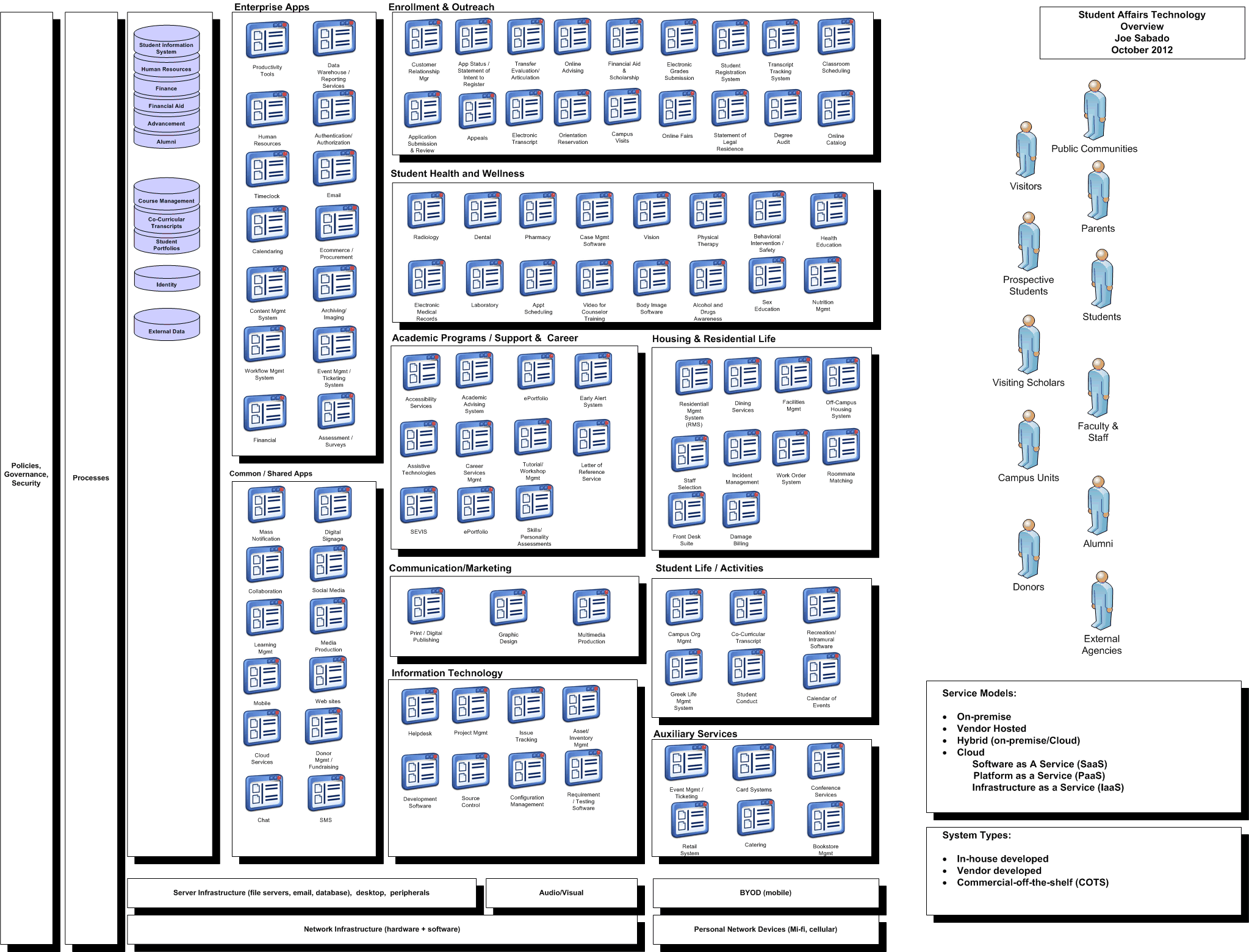
Technology is a common thread in all areas of student affairs. Consumer products and services such as social media, cloud, and mobile computing as well as enterprise technologies offered by IT units provide departments and staff with new ways to conduct business and provide services to their customers.

The adage “a picture is worth a thousand words” is appropriate when attempting to describe the complex and vast array of technologies used in student affairs. While certainly not complete, the diagram below is an attempt to represent a high level overview of technologies including processes and policies from my perspective. Click on image below to view full size diagram.


What else would you add?


Innovathon in Student Affairs

Ideas to solve real-life business issues  can come from anyone in the organization. These ideas need to be heard.  Many blogs and  social business books  discuss the benefits from tapping in the collective knowledge of employees within an organization. Books like The Social Organization: How to Use Social Media to Tap the Collective Genius of Your Customers and Employees and Smart Business, Social Business: A Playbook for Social Media in Your Organization emphasize the idea of  learning, adaptive organization built on collaboration and communities to promote innovations.  The diverse work that we do and the collaborative culture we promote in student affairs leads me to believe I think we should/need look for opportunities to involve all staff in finding ways to improve how we serve students towards their learning and personal development.

One opportunity that comes to mind is to have friendly competitions called “innovathon”. By no means is this idea new or unique. Companies such as Facebook and Google have hackathons designed for fun and social purpose but also with the goal of producing usable products. Universities like UCSB have contests for budding entrepreneurs to build new products/services.  While not a novel idea, I think it does provide some tangible benefits Here are some initial thoughts on this concept:

Goal:

To promote sharing of ideas from any/all student affairs employees (staff, students) with the end goal of solving actual business problems.

Participants:

  • Coaches/Mentors   – These could be Senior Student Affairs Officers (SSAO) or those familiar with university processes. Their role is primarily to guide the individuals/teams and serve as resources. They should have minimal input on the ideas themselves.  The ideas need to come from fresh or different set of perspectives.
  • Teams  – These teams shall consist of student workers and professional staff (number of team members can vary).
  • Selection Panel  – A panel consisting of students/staff responsible for the initial and final selection of ideas/products  to be implemented.
  • Executive Project Sponsor – Vice Chancellor or a SSAO.

Benefits:

  • Development of innovative but implementable products & services
  • Provide students and staff insight on how the university process works as part of their professional development.
  • Opportunity to work with other employees/students  in the division beyond the scope of their job responsibilities.
  • Opportunity to work with senior executives and managers (coaches) which could lead to mentor/mentee relationships.
  • Morale booster for the organization and those involved.

Required Resources:

  • Funding to implement selected ideas.
  • Department’s approval for employees to work on their projects.

Process/Rules:

  • Invitation to the competition will be communicated to the organization  (email, social media, posters). Invitation will include rules and guidelines.
  • Teams submit a proposal (general description) of their ideas and submit it via email to the selection panel.
  • Selection panel reviews and choose ideas to be considered for further evaluation phase.
  • Selected teams and their proposals are assigned coaches. The teams will be provided some time (tbd) to work on their ideas and prepare for a presentation.
  • Selected teams will present their proposals to the selection panel and the Executive Project Sponsor.

I hope the general concept  shared in this post can spur some creative opportunities for your organization.  I would love to know if you have done a similar concept in your organization or if you could add more details to the ideas in this post.


How to Promote Ideas and Convince Others

One of the mistakes I have seen by leaders and those  promoting new ideas is failure to realize others are not at the same place they are. Because these leaders are so invested in an idea or a cause, there is sometimes a blind expectation that those around them have the same perspective and willingness to embrace their ideas as they do.  In some cases, there is also the false expectation that people are just willing to accept ideas  because they come from a position of “authority”, per the organizational chart. I am not exempt from making these mistakes, but as I progressed through my career, I have learned to be more cognizant to avoid them. I have become more patient, and I have come to realize that it does take effort to convince others to accept my ideas. One approach I adopted early on in my career and something I still practice today is that when I ask my team and colleagues to consider my ideas, I have to be ready to explain the reasons behind them.  In addition to this approach, here are some helpful ideas to consider:

(continue reading…)


  • Archives

  • Copyright © 1996-2010 Joe Sabado - Higher Education & Technology Leadership. All rights reserved.
    iDream theme by Templates Next | Powered by WordPress